
An Open-Studio First Date: Make Something Without Making It a Test
Dating advice
3 min read
Plan a relaxed first date at an open studio or drop-in workshop with a clear time, transparent cost and room to make a small thing together.
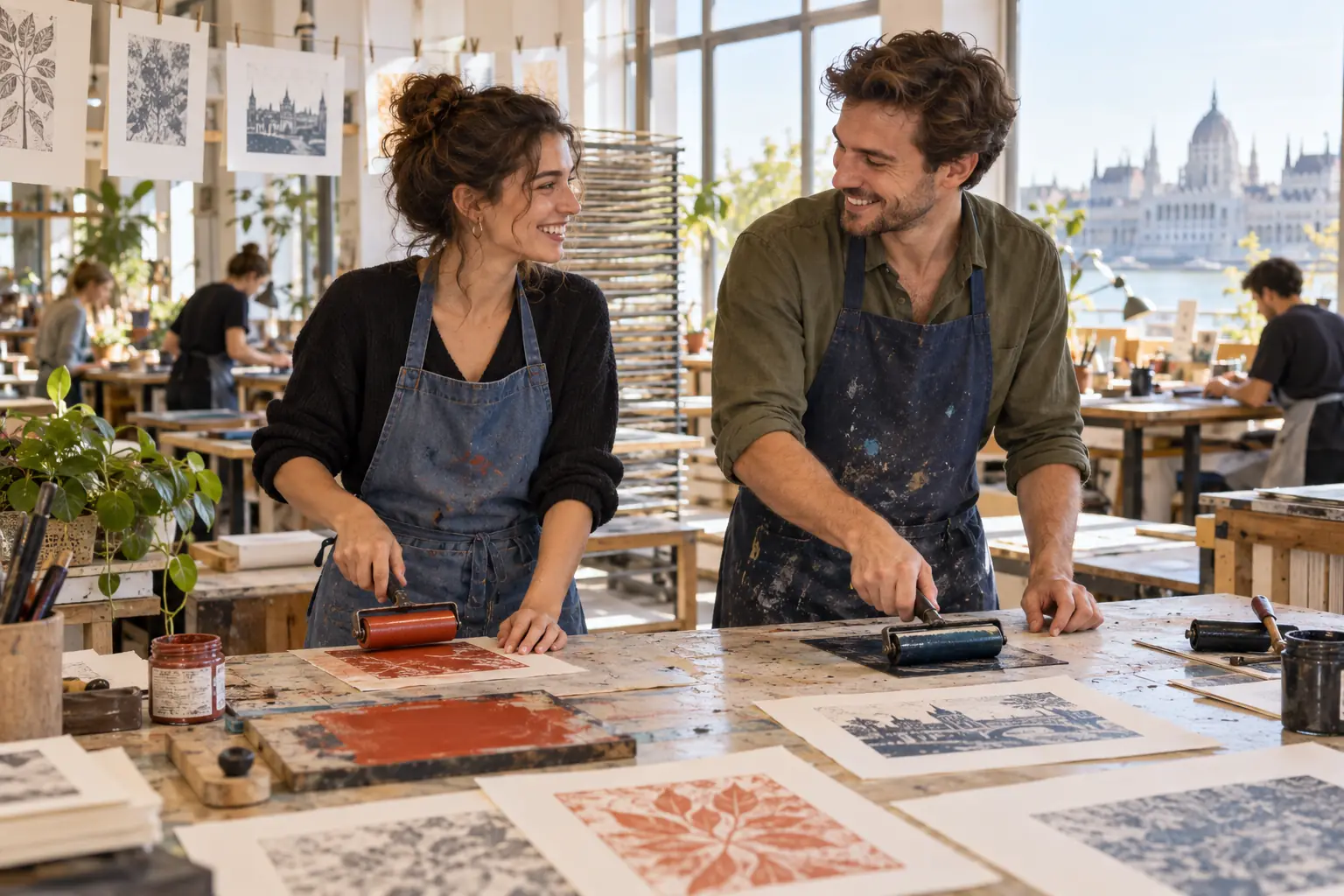
An open studio can be a good first-date plan when you want something more than coffee without committing to a full-day activity. You have a shared task, a few natural things to talk about and permission to focus on your hands for a minute if the conversation pauses.
The goal is not to reveal hidden artistic talent. It is to make a small, public plan where both people can show up, try something and decide what feels good next. A screen-printing drop-in, community pottery session, collage table or repair café can work well when the practical details are clear.
Choose a genuinely drop-in-friendly place
Look for an open studio, maker space or community workshop that welcomes beginners and publishes its hours, price and booking rules. Some studios are quiet working spaces rather than social events; others require advance registration, closed shoes or a short safety briefing. Check before you invite someone.
Make the plan specific: “Would you like to try the Saturday printmaking drop-in at 2? It is about an hour, costs around this much and we can get tea nearby afterward if we both want to.” That is easier to answer than “We should make something together sometime.” Like any first-date activity, it should have a clear place, time and shape.
Choose somewhere both of you can reach and leave independently. A public venue near a tram, bus or metro stop removes needless logistics; our guide to planning a first date near public transport explains why that matters.
Keep the task small and beginner-friendly
For a first meeting, choose an activity that lets you make one simple thing in 45 to 90 minutes. A postcard print, tiny clay dish or small repair is enough. Avoid a multi-week class, a project that needs expensive materials or anything that leaves one person watching while the other works.
You do not need to teach, correct or rescue the other person. Ask what they feel like trying, share the tools and let mistakes be ordinary. “Mine is definitely more abstract than planned” is a much kinder opening than treating the result as a scorecard.
If one of you has more experience, keep it low-key. Offer help once, then accept a no. The point is shared discovery, not impressing someone or proving that you are naturally good at something.
Say the cost and practical details early
Creative spaces often have a session fee, material charge or optional purchase at the end. Mention the likely total before the other person agrees. If the studio has a sliding scale, a free entry period or a bring-your-own-materials rule, include that too.
Paying separately is a comfortable default. Offering a ticket or supplies can be generous, but it should never create a debt, pressure to stay longer or an expectation of intimacy. The same boundary helps on first dates with different budgets: both people need a real, easy way to choose what they can spend.
Wear clothes that can handle a little ink or dust, and check whether the venue provides aprons and accessible workstations. These tiny details make the invitation feel thoughtful rather than overplanned.
Let the date have an easy ending
At the end of the session, pause and check in. “I enjoyed making that with you. Do you want to get a tea nearby, or shall we call it a day?” gives both people a comfortable answer. A short coffee, walk or browse nearby can extend a good meeting; leaving after the workshop is also a complete date.
Keep the activity public and make your own way home. Do not turn taking a project home together, helping someone carry supplies or finishing a piece later into an obligation. If you want a second date, say so clearly afterward.
VOOZE is built around real plans: a place, a time and room for two people to choose. An open-studio date gives you something small to make together. What matters is whether the plan feels easy, respectful and worth repeating.