
An Art-Gallery First Date: Look Together, Not for the Right Answer
Dating advice
3 min read
How to plan an art-gallery first date with a short exhibition, clear entry costs, an easy meeting point and conversation that stays curious rather than performative.
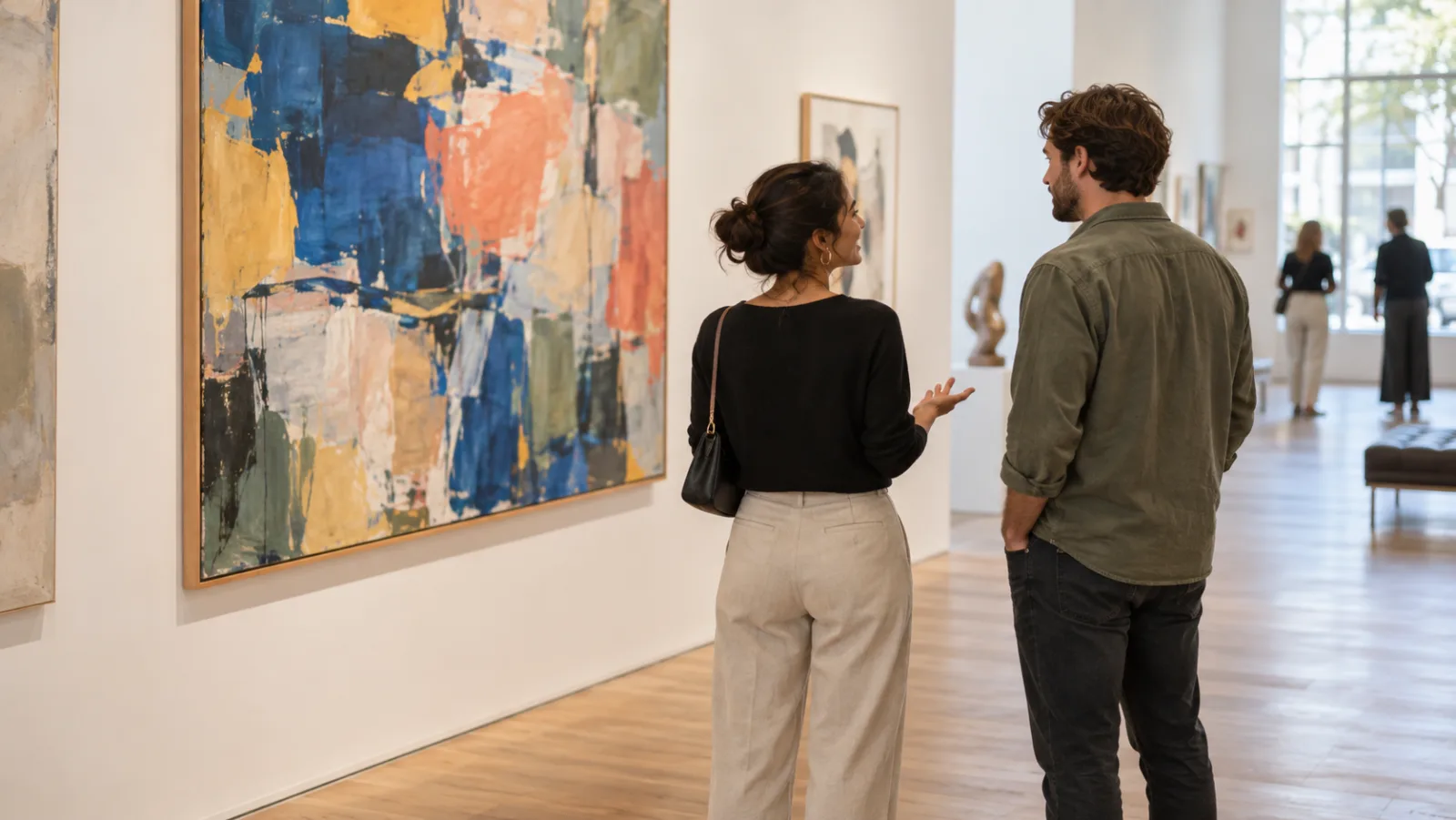
An art gallery can be an easy first-date plan: there is something real to look at, the pace is naturally unhurried and silence does not have to feel like a problem. It works best when the gallery is a shared setting, not a test of who knows the most about art.
The point is not to prove you have the correct opinion about a painting. It is to notice what catches each person's attention and whether talking together feels comfortable.
Pick one exhibition, not a whole afternoon
Choose a small gallery or one temporary exhibition that can be seen in forty-five to ninety minutes. Send the link before suggesting it, with the opening hours, entry price, address and the kind of work on show. Contemporary photography, illustration, design or a local group exhibition can be easier to enter than an enormous collection with no clear endpoint.
“There is a small exhibition at [gallery] on Saturday at 3. It is open until 5, costs [amount], and the café nearby is public if we feel like talking afterwards. Would that be enjoyable for you?”
Make the alternative real if they are not interested. A coffee, a short walk or another exhibition is not a consolation prize. Our guide to choosing a first-date activity can help turn preferences into a concrete plan without making anyone justify them.
Set the practical details before you go
Check whether you need a timed ticket, whether bags must be stored, which entrance is open and whether photography is allowed. State the cost before booking, including any ticket fee or coat check. If one person wants to invite the other, say it plainly; otherwise, each person can buy their own entry or you can agree how to split it.
Meet at an obvious public point—outside the entrance or by the ticket desk—and arrive independently. A gallery date does not need to become more private just because it is quiet. If accessibility, seating, lighting or crowds matter, ask directly and look at the venue information together. Our guide to planning an accessible first date has a useful way to do that without assumptions.
Let curiosity do the work
You do not need art history to have a good conversation. Try specific, low-stakes questions: “Which piece would you take home?” “What did you notice first?” or “Does this make you feel anything, or mostly make you curious?” Share your own answer before asking for theirs, and let a simple “I do not know what I think yet” be enough.
Avoid turning the visit into a quiz, correcting someone for using the wrong word or racing through rooms to make the ticket feel worthwhile. You can disagree about a work without treating the disagreement as a verdict on the person. If neither of you likes a piece, that can be a funny moment rather than a failure of the plan.
Give the date a clear, optional ending
Before you enter, treat the exhibition as a complete date. At the end, offer a small, genuine choice: “I liked hearing what you noticed. Would you like a tea nearby for twenty minutes, or shall we head off?” Both answers should be uncomplicated.
If you continue, use the artwork as a starting point, not the only topic. If you leave, a warm goodbye at the gallery is a full ending. The 90-minute first-date plan is built on the same idea: a defined finish makes it easier for both people to choose more.
VOOZE is for real plans. One exhibition, clear details and room for an honest reaction can turn “we should visit a gallery sometime” into a first date that feels easy to accept, reshape or decline.